01
A town born from rice straw
Slipper making in Kahoku began with farmers weaving sandals from the rice straw left over after the harvest. By 1941, Yamagata produced more sandals than anywhere in Japan.
Slippers & zori from Kahoku, Yamagata / since 1955
Carrying on the craft of straw sandal making, one pair at a time in a small workshop.Cool in summer, warm in winter — indoor footwear from the town of Kahoku, Japan.
Light. Dry. Naturally Comfortable.

HISTORY
Basho's idea of what endures and what moves with the times. On land that the Mogami River once connected, here is what Kawachi Slipper has changed — and what it has not.
"Gathering the summer rains, how swift — the Mogami River." When Matsuo Basho wrote those lines in The Narrow Road to the Deep North, the Mogami was also the road that carried safflower. Yachi was a river port and a collecting point for safflower and ramie. The blossoms went downriver to Sakata, crossed by kitamae ship to Tsuruga, and traveled on by Lake Biwa and the Yodo River to become the rouge of Kyoto and Osaka.
In the late Edo period this Murayama region is said to have produced around half of all the safflower in Japan. Suzuki Seifu, who hosted Basho for eleven days in Obanazawa, was himself a safflower merchant; the haiku written there — likening the blossom to a lady's eyebrow brush — survives in The Narrow Road. The safflower is still the flower of Yamagata Prefecture, and of the town of Kahoku.

01
Slipper making in Kahoku began with farmers weaving sandals from the rice straw left over after the harvest. By 1941, Yamagata produced more sandals than anywhere in Japan.
02
After the war, footwear shifted from tabi to socks, and from sandals and geta to slippers. In 1955 we were among the first in town to begin manufacturing slippers.
03
We helped lay the foundation for Japan's leading slipper-producing town, and still bring that same skill and careful work to products made for the needs of today.
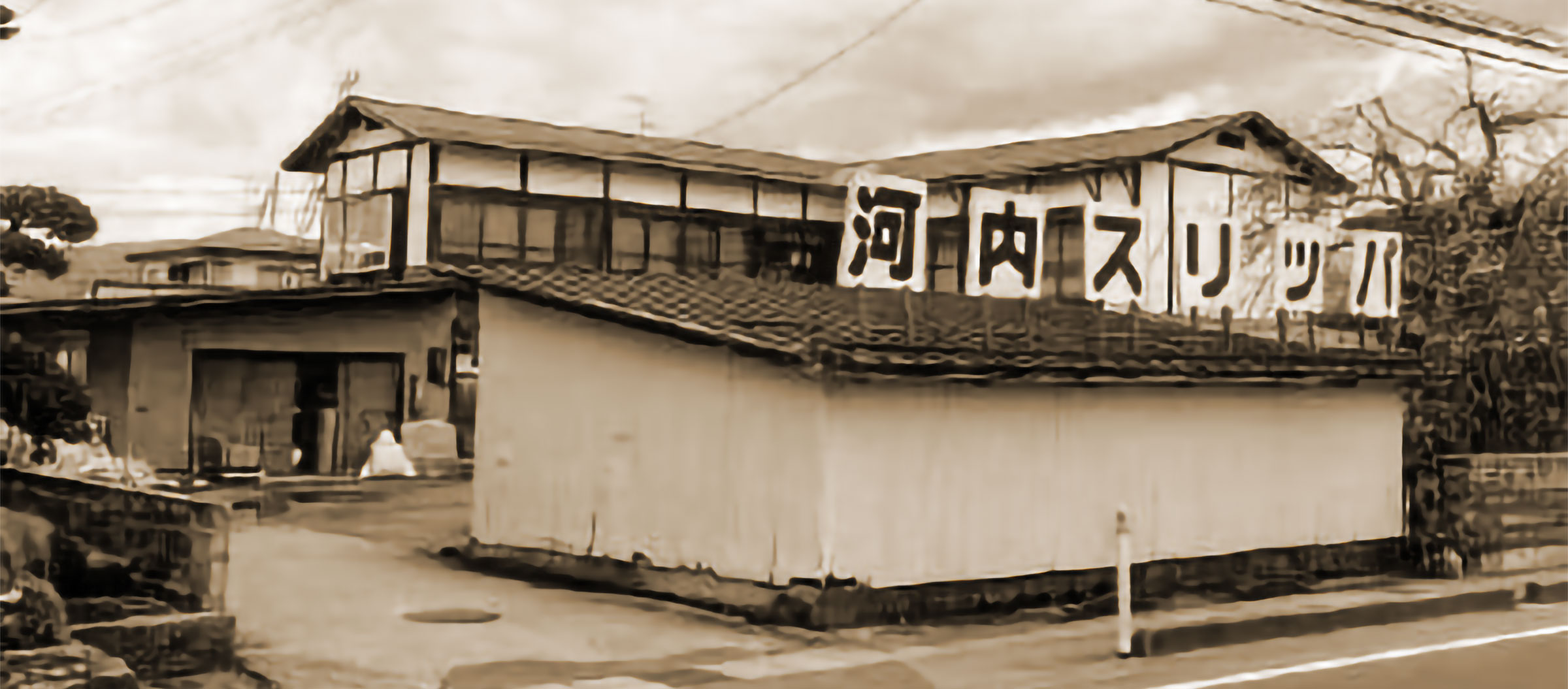
Late in life Basho taught that what never changes and what changes with the times are, at root, one and the same.
The hands that once wove rice straw went on to sew slippers, and now work with insoles of paper yarn made from thinned timber. The materials and the shapes have changed. What has not is that every pair is still finished by hand, in a small workshop.
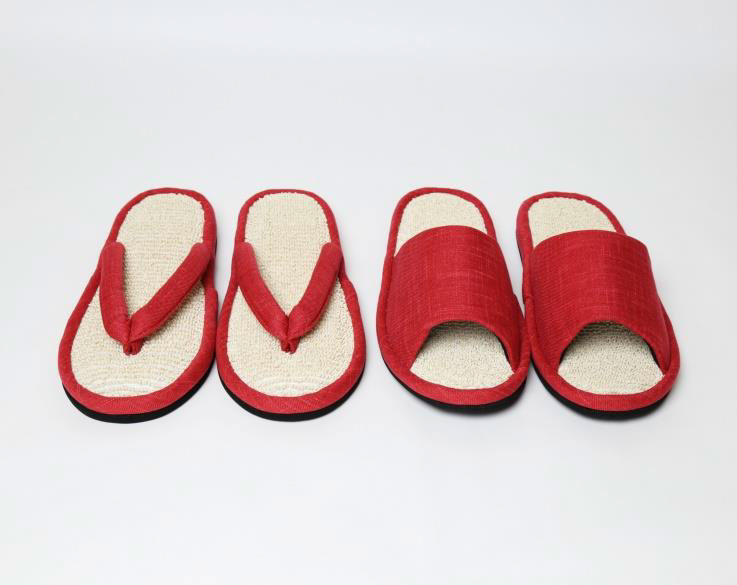
SARARIPPA
Summer slippers with an insole of "washi mat" — paper yarn made from thinned forest timber, pile-woven into a backing cloth. They have a firm, pleasant body underfoot and stay dry and comfortable even in a sweaty Japanese summer.
Official name: SARARIPPA. The logo and packaging carry the short form SARIPPA.
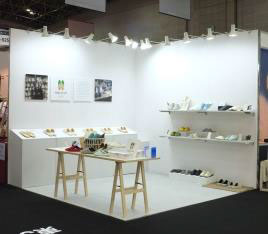
Kahoku is the town behind Japan's largest output of slippers. The Yamagata Slipper Manufacturers' Association has exhibited at the Tokyo Gift Show since 2017, and SARARIPPA was developed between October 2018 and March 2019. At the 2020 Gift Show it drew an inquiry from a shop in France.

PRODUCTS
Click an image to see materials, sizes and other details.
Indoor slippers
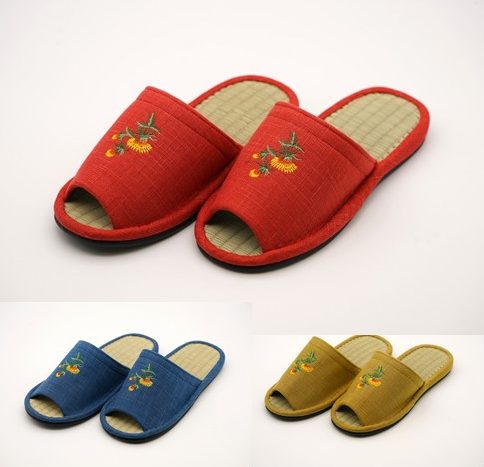
The safflower is the flower of Yamagata Prefecture and of Kahoku itself. Safflowers have been grown here since the Muromachi period, and from the Edo period into early Meiji the town flourished as a hub of Mogami River shipping, leaving a rich cultural legacy tied to Kyoto and Osaka. These slippers express the history and legacy of Kahoku slipper making.
ColorsRed, Khaki, Blue
Indoor zori sandals
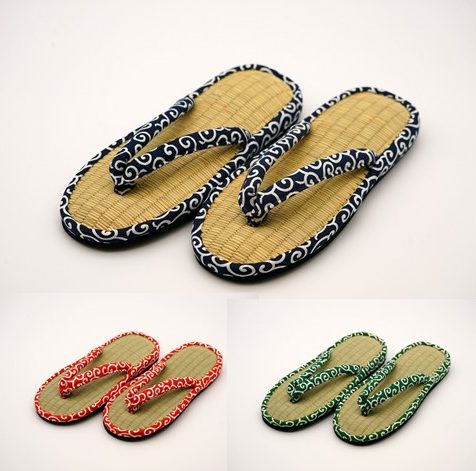
The karakusa arabesque, whose vines grow strong and unbroken, has long stood for prosperity and long life. Each pair is made one at a time, with a wish for health and longevity.
ColorsRed, Green, Black
Indoor slippers
The karakusa arabesque, whose vines grow strong and unbroken, has long stood for prosperity and long life. Each pair is made one at a time, with a wish for health and longevity.
ColorsRed, Green
Indoor slippers
Light, warm and smartly finished with outside stitching. Veteran craftspeople finish every pair by hand for outstanding comfort. Available in eight colors — find your favorite.
ColorsLady Red, Honey Yellow, Chocolate Brown, Olive Green, Cobalt Blue, Natural White, Ash Gray, Black
Indoor zori sandals
Indoor zori with a thong strap and a "washi mat" insole – washi yarn made from thinned timber, woven into a soft pile. The dry, smooth feel of washi is pleasant on bare feet, and the whole zori can be washed. Perfect for relaxing at home.
ColorsRed, Khaki, Blue
Indoor slippers
Open-toe slippers with an insole of pile-woven washi paper yarn made from thinned timber. A firm, pleasant feel underfoot, fully washable and light to wear.
ColorsRed, Khaki, Blue
Indoor zori sandals
Smooth and pleasant underfoot. Made with a striped washi mat, to brighten your step.
ColorsPink, Yellow, Green, Blue
Indoor slippers
Keeps its shape and is fully washable. Made during the pandemic, with the wish that bright feet might lift the spirits.
ColorsPink, Yellow, Green, Blue, White, Black
GUIDE
A side-by-side look at shape, material and size. Select a product name to see full details.
| Product | Shape | Material | Size | Colors | Care |
|---|---|---|---|---|---|
| Indoor slippers | Igusa rush (tatami) | M・L | 3 | — | |
| Indoor zori sandals | Igusa rush (tatami) | S・M・L | 3 | — | |
| Indoor slippers | Igusa rush (tatami) | S・M・L | 2 | — | |
| Indoor slippers | Corduroy | S・M・L・LL | 8 | — | |
| Indoor zori sandals | Washi paper | M・L | 3 | Fully washable | |
| Indoor slippers | Washi paper | M・L | 3 | Fully washable | |
| Indoor zori sandals | Washi paper | M・L | 4 | — | |
| Indoor slippers | Cotton | S・M・L | 6 | Fully washable |
A rush plant used for the facing of tatami mats. It absorbs moisture well, feels dry and smooth against bare feet, and carries a distinctive scent.
Washi paper made from thinned forest timber, cut into fine strips and twisted into yarn. It is light and dries quickly, and is woven into a pile mat for the insole.
A pile fabric with vertical ridges. It has body and traps air, so it insulates well and has a soft, warm feel.
The safflower is an annual of the daisy family and the flower of Yamagata Prefecture; a crimson dye is taken from its blooms, shipped in the Edo period along the Mogami River to Kyoto and Osaka. Karakusa is a pattern of intertwining vines — because the vines grow on unbroken, it stands for prosperity and long life.
CRAFTSMANSHIP
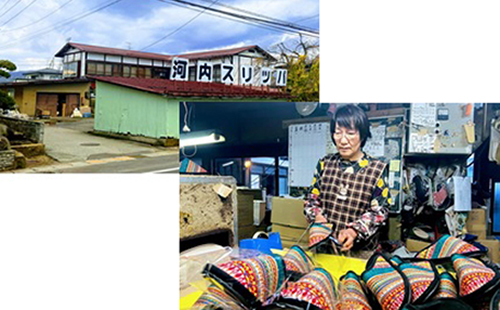
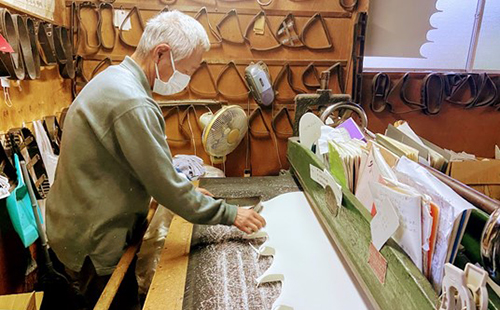
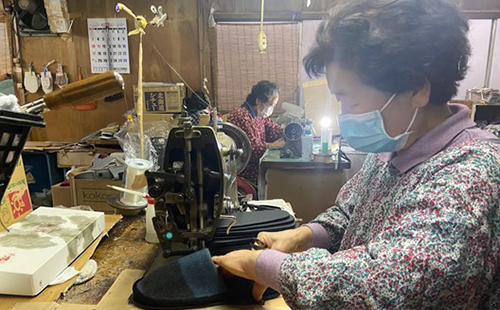
Slipper making in Kahoku is said to have begun with farmers weaving sandals from the large quantities of rice straw produced as a by-product of growing rice. In 1941 Yamagata Prefecture produced more sandals than anywhere in Japan, but after the war ways of life changed quickly: tabi gave way to socks, and sandals and geta to slippers, sandals and shoes. In 1955 we were among the first to start manufacturing slippers, helping to lay the foundation for the town that today produces more slippers than anywhere in Japan, and carrying that skill through to the present day.
In a small workshop, led by our 97-year-old president, we make slippers with a single motto: durable and comfortable to wear. With skill built over many years and careful work, we offer products suited to the needs of the times. We will keep delivering slippers that are cool in summer and warm in winter.
COMPANY
CONTACT
Please use the forms below. We will review your message and get back to you.
Questions about our products or wholesale.
We will check stock, delivery time and shipping cost, then reply to you. Submitting this form does not confirm an order.